
A Paediatric Physio’s Guide to High Chairs: Postural Stability and Feeding

Choosing a high chair is one of the most important gear decisions you’ll make for your baby’s physical development. As a paediatric physiotherapist, I look at mealtime through the lens of postural control. Mealtime is a high-demand task; if a child’s trunk and pelvis are unstable, their ability to coordinate the complex oral-motor movements required for chewing and swallowing is compromised.
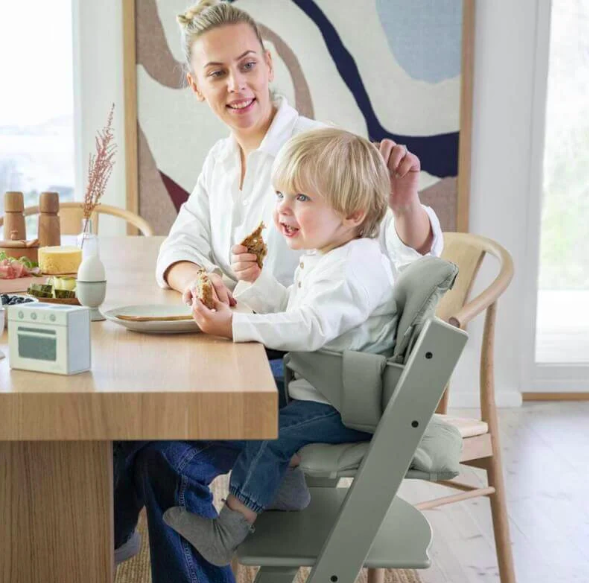
If a baby is wobbling or slouching, they can’t focus on the complex task of chewing and swallowing. I recommend prioritizing the following ergonomic features when selecting a high chair.
1. Flat Seat
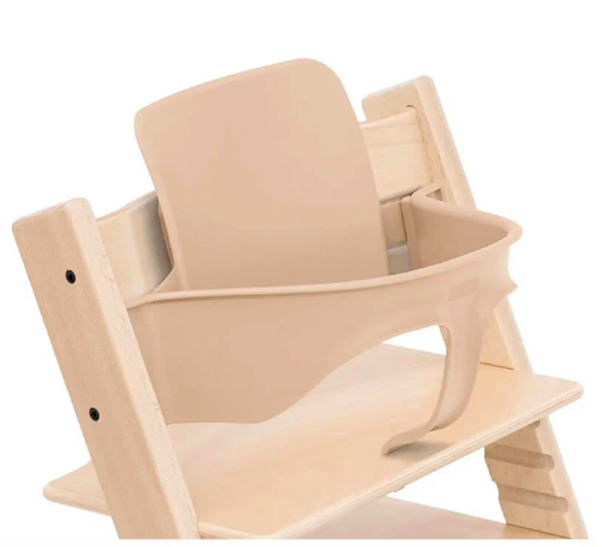
Modern high chair designs often feature "bucket" or contoured seats. From a clinical perspective, these can be counterproductive as they often encourage a posterior pelvic tilt, leading to a rounded spine. A flat, firm seat allows the child to sit directly on their ischial tuberosities (sit bones), facilitating an active, upright posture and better airway protection.
2. The 90-90-90 Rule: Adjustable Footrest
.png)
One of the most critical components of an ergonomic chair is a height-adjustable footrest. Without a solid base of support, a child’s legs dangle, which leads to postural fatigue and restlessness. Providing a surface where the hips, knees, and ankles can maintain a 90-degree angle creates "proximal stability for distal mobility"—meaning the more stable their body is, the more controlled their hand-to-mouth movements will be.
3. Lower Back Support and Backrest Alignment
An ideal backrest should be firm and include integrated lumbar support to maintain the natural curvature of the spine. I look for an angled backrest that prevents "slumped" positioning, which can compress the abdominal cavity and interfere with efficient digestion.
4. The Detachable Tray
.png)
A tray that brings the food close to the baby prevents them from leaning too far forward and losing their balance. I love a detachable tray because it makes the chair versatile. Once the tray is off, you can pull the chair right up to the family table, promoting social learning. Plus, it doubles as a perfect surface for messy sensory play or "table-top" physio activities.
The "perfect" chair isn't the most expensive one. Proper ergonomics in early childhood are not merely about comfort; they are about providing the skeletal support necessary to prevent choking risks and promote function. By selecting a chair that supports the body from the feet up, you are setting the foundation for successful long-term feeding habits. In doubt, consult a pediatric therapist.
Check out the Childhome Evosit.
By Julia Lee Paediatric Physiotherapist at The Round Clinic